Sustainable Procurement
GRI 301
HKEX Aspect A2 KPI KPI B5.4
HKEX Aspect A2 KPI KPI B5.4
Today, companies face increased regulatory requirements to identify and address ESG risks beyond their own operations, and stronger investor focus around sustainable procurement practices. Supply chain management was identified as a megatrend and was also one of the top ten priority topics for the Company’s operations in our 2023 stakeholder-driven materiality assessment.
As such, we have in place a robust sustainable procurement strategy to discuss, manage, track, and report supply chain sustainability issues.
Sustainable Procurement for Hong Kong and the Chinese Mainland in 2025

HKD1,722million
Total value
>25%
of total procurement spend
Sustainable Procurement Guidelines and Specifications
Since 2015, Swire Properties has implemented environmental procurement guidelines in accordance with the ISO 14001 Environmental Management System. This system tracks our consumption of office supplies, building services equipment and building materials that meet specific environmental criteria – such as whether the products have been certified or accredited by reputable independent third parties. We use this data to evaluate our sustainable procurement performance and identify further opportunities to source more sustainable products.
We require the responsible management of waste within our construction sites, and require our contractors to document their waste management approaches with a waste management plan. To ensure proper disposal and recycling practices are adhered to, all contractors are educated on waste management techniques and are required to document their waste management efforts regularly via an Environmental Monitoring and Audit Report that contains information in the form of waste flow tables.
Beginning in 2020, we expanded our green procurement process to include sustainability-related products and services, including expenditures on promoting safety, health and wellbeing in our properties and new developments.
Swire Properties was the first real estate developer in Hong Kong to introduce low-carbon specifications for new developments, with procurement specifications on recycled content and low-carbon manufacturing techniques for major building materials such as concrete, reinforcement bar (“rebar”) and structural steel, as well as a requirement to obtain green building certifications.
These specifications have now been adopted into the main contract for new developments in Hong Kong and the Chinese Mainland, as appropriate. Pre-qualification checks are conducted to ensure that tenderers fulfil all sustainability requirements in their tender specifications. To improve construction material environmental impact transparency and lifecycle performance, we require key construction materials to be accompanied by verified Environmental Product Declarations (EPDs) and Health Product Declarations (HPDs). We also track our consumption of specific construction materials used in projects under development, such as timber, concrete and rebar. This allows us to benchmark our consumption of these materials and assess their environmental impact during the construction of new developments.
In our existing operations, we require our key service providers – engineering services, cleaning, landscaping, and others – to obtain certification under internationally recognised environmental and OHS standards.
We also provide sustainable procurement guidelines to our procurement staff in Hong Kong and the Chinese Mainland for non-key materials and services, such as office equipment and catering. This empowers them to consider environmental performance during the procurement of goods and services.
Partnerships and Recognitions
We have been a member of the Hong Kong Green Purchasing Charter of the Green Council since 2013 and a member of their Sustainable Procurement Charter since 2018. We have also been part of the WWF-Hong Kong Sustainable Seafood Business Membership Programme since 2023, which commits us to promoting the sustainable sourcing and consumption of seafood in Hong Kong.
Since 2021, we have worked with Tsinghua University to explore the availability and use of low-carbon building materials in the Chinese Mainland.
In November 2024, the “Low Carbon Emissions Steel Initiative for Real Estate in China” initiative, co-convened by ULI Greenprint, in partnership with the World Steel Association and the China Iron and Steel Association, established a cross‑sector coalition of over 30 companies across the real estate and steel manufacturing value chain to accelerate the adoption of low‑carbon emissions steel in the Chinese mainland. The initiative created a neutral platform with meaningful leverage on both the demand and supply sides: Developer signatories collectively manage hundreds of construction projects under development in the country, while steel signatories represent nearly 30% of the country’s crude steel production capacity. Swire Properties was excited to be one of the first three developers to endorse this initiative.
During three in-person round-table meetings in Beijing, Shanghai and Hong Kong in 2025, the initiative brought together more than 70 executives from across the construction value chain, as well as representatives from standard-setting bodies and financing communities. Signatories shared project case studies and market research results, jointly mapped systems‑level barriers to scaling green materials and identified priority intervention areas and collaborative solutions.
Swire Properties is committed to incorporating clauses requiring Environmental Product Declarations (“EPDs”), or equivalent documentation, from suppliers of major construction materials such as concrete and steel into tender specifications for all new development projects by 2030. We will work closely with our contractors and suppliers to enhance the transparency, consistency and verifiability of carbon emissions across the lifecycle of steel and other key building materials.
To further facilitate the low-carbon transformation of our supply chain, we also regularly share our experience with contractors and building material suppliers in the real estate and construction industries through publications, presentations at conferences and other channels. The aim is to collaborate with our supply chain partners to innovate low-carbon best practices and push for a greater general availability of low-carbon building materials.
The relevant SDGs are:
SDG 12
Ensuring sustainable consumption and production patterns.
SDG 13
Taking urgent action to combat climate change and its impacts.
Continuous Expansion of our Sustainable Sourcing Programme
Swire Properties deepened its sustainable sourcing practices in 2025, conserving ecosystems, supporting local agriculture and protecting biodiversity across our supply networks.
In the Chinese Mainland, we procured 100% certified sustainable timber at all our new developments, including Taikoo Place Beijing which used approximately 5,000 m3 of certified sustainable timber for formwork. This ensured the development's full compliance with internationally-recognised forest certification standards including the Forest Stewardship Council (“FSC”) and the China Green Product Certification by China Quality Certification Centre (“CQC”).
In Hong Kong, all newly-procured HVAC technical service items across our portfolio were certified under the CIC Green Product Certification scheme or other recognised environmental product labels. Our hotels expanded their sustainable sourcing to include more product categories and prioritise business relationships with local suppliers. Our hotels sustainably sourced over 80% of coffee via the Rainforest Alliance-benchmarked Nespresso AAA Sustainable QualityTM programme, we obtained over 55% of vegetables and fruits from local sources and chocolate was purchased from suppliers accredited for their positive environmental and social practices, such as Fair Trade and Rainforest Alliance certifications.
Prioritising Low Embodied Carbon Construction and Development
Prioritising Low Embodied Carbon Construction and Development
Swire Properties set a new milestone at our 269 Queen’s Road East project in 2025, using 100% low-carbon concrete for the structural elements in both the foundation and superstructure stages of construction. All concrete used achieved a CIC Green Product Certification Platinum rating.
For the foundation, pulverised fuel ash (“PFA”) mixed concrete was used, which reduced Scope 3 carbon emissions by about 34% when compared to ordinary concrete. For the superstructure, all concrete was mixed with ground granulated blast-furnace slag (“GGBS”), reducing Scope 3 carbon emissions by around 42% versus ordinary concrete. This is one of the first residential projects in Hong Kong to adopt 100% GGBS concrete for structural elements.
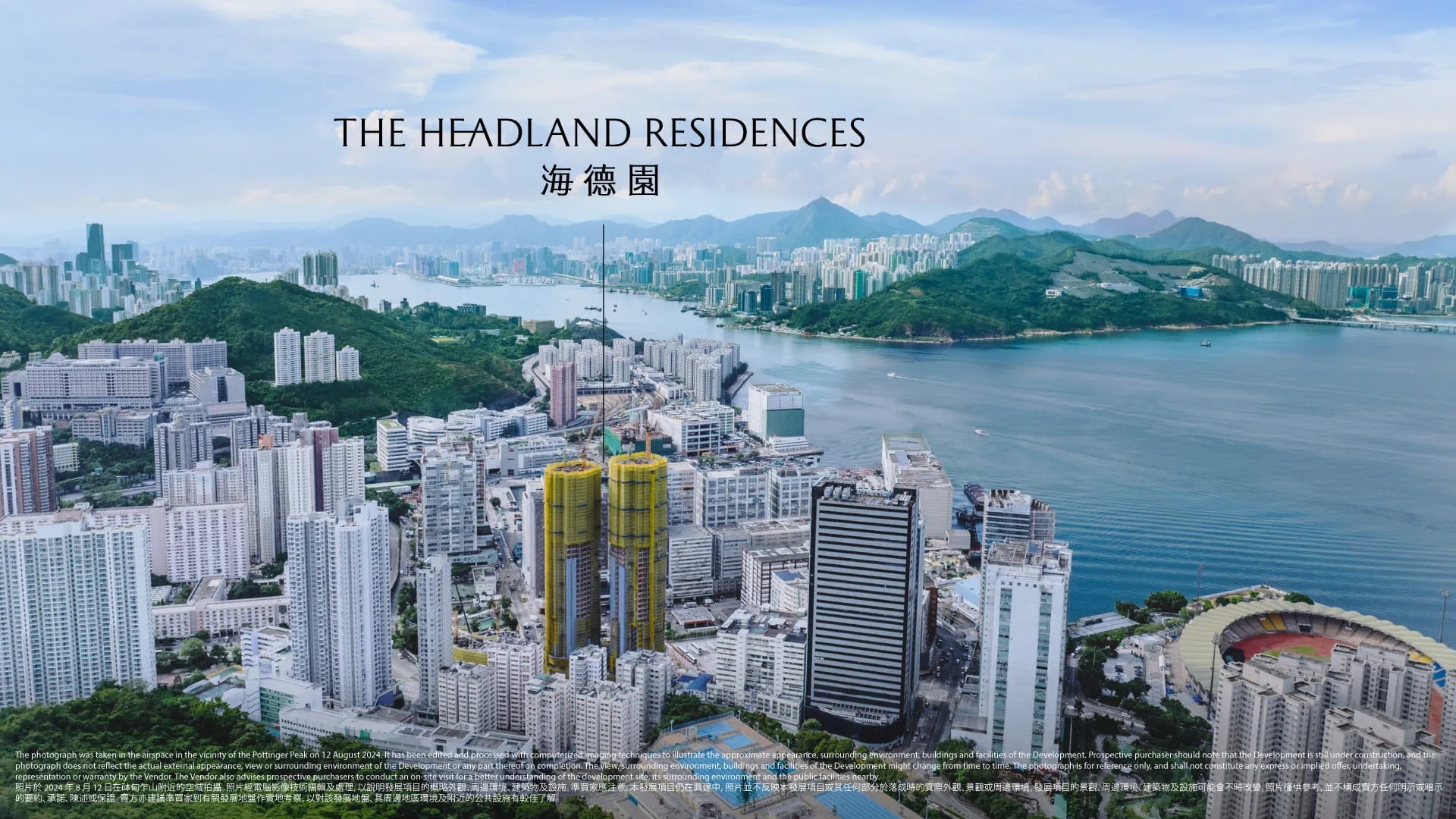
At THE HEADLAND RESIDENCES, over 6,000 m³ of low-carbon concrete with GGBS was used. At Tower 2 and 3, low-carbon concrete made with PFA was used in the podium, transfer plate Public Transport Interchange (PTI), and basement, as well as certain vertical elements. Altogether, 77% of the total volume of concrete used in this project obtained Platinum or Gold level CIC Green Product Certification.
SEE MORE IN